Reviews related to : Kodak
Around four years ago I reviewed my previous Kodak printer, I was told they were shutting that part of the business but still producing cartridges for their units. I saw a Kodak offering last month from Curry’s for a Kodak Printer so this sent me into detective mode.
The Verite name has been appended to the word Kodak and here I am looking at the ‘65 Plus’. This is an All In One unit which means it Scans, Copies and Prints. It can be connected via Wi-Fi or USB and it can also connect to mobile devices by several methods including installation using NFC. The unit is a black box so your other half may insist it resides behind the sofa or in a cupboard, so Wi-Fi would be needed for most in this case.
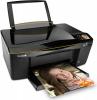
This unit is small, in fact so small you think it cannot support an A4 page but it does. The black colour may put some off but as it can connect by Wireless as well as USB the former will allow it to sit out of sight in a cupboard.
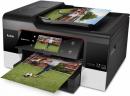
A Multi Function product as it has Fax so why is it described as a Home product. Surely virtually no one in the home used Fax. I always struggle to find office users who still use Fax, but I assume Fax is still popular somewhere.
The Kodak Hero 9.1 measures 44x39x21cm and apart from maybe adding a few centimetres to open the flatbed lid that is the full footprint of the unit. The paper input tray fits snug to the front of the unit and the dimensions include the duplex bubble at the rear. You can set it up to run, USB, Ethernet or Wireless. One little niggle for me is that you insert the CD and then it downloads the majority of files from the Internet.
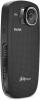
With Flips now a discontinued line there is a gap in the market for a small pocket size camcorder, this one from Kodak is waterproof to ten feet and has a range of special features as well as the ability to take stills as well as video.
The Kodak Play Sport ZX5 video camera measures 11x5.5x1.5cm and weights 125grams. Like most cameras and small video units the storage medium is SD card and this can accept cards up to 32GB. The on/off button is on the top of the camera, the right side has whatever SD card you use behind a snug fitting door. Bottom corner has two holes for you to feed a wrist strap though very useful for underwater use. The base has the normal tripod screw fitting.
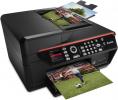
I wondered when I saw a range of MFU items recently why Hero 6.1 was not in the range. They were all designated "home" products. Here is the exception the 'office' offering, scan, print, copy and fax all in the one package.
The Kodak Hero 6.1 measures 46x39x24cm and is not sleek, but as it is an office machine looks are not important only user functionality. I am no fashion guru but alongside the Hero 7.1 it looks bulky – probably because of the page feeder – and dare I say it a little last year in design. Still in an office the only thing that matters is its performance.
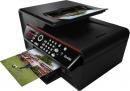
Depending upon your view point, a hero could be a mythical character of old, a comic book creation with super powers, a member of the armed forces or just an ordinary person with special qualities.
In the case of Kodak, a hero is one of the company’s new range of multifunction devices designed for the home or small office. One of the models in this new series is the Office Hero 6.1 product. This particular model certainly catches the eye with its bulky appearance and dimensions of 465 x 420 x 255mm (W x D x H). The Office Hero 6.
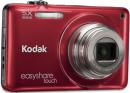
A small digital camera from Kodak, this however is part of their idea to make sharing easier and the camera itself has a 16MP image size and comes with 5x optical zoom so can it offer nirvana of everything to everyone?
The Kodak EasyShare Touch M5370 measures 10x5.5x2cm the last figure the width expands by another 2.5cm when fully zoomed. It weights 137grams. Mine was a metallic red and silvered face with the rest in black. The screen however is rather reflective in strong sunlight. The face has the lens towards the right side with the bar flash mounted above and to the left it can never be nearer than 3cm to the lens.
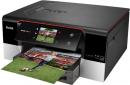
The latest range of Kodak All In One devices, USB and Wireless and software that can do more than the average software package. Here I am looking at the basic All In One offering units cost less than they did and ink is cheaper as tanks are larger.
The Kodak Hero 7.1 All-In-One printer measures 45x41x19cm, all black and rather boxy, certainly not something to please the lounge police but it can be USB or Wireless and of course the latter means it can live out of sight in a cupboard or maybe behind a settee.
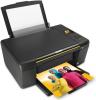
Adding to its range of AIOs (All-in-Ones), Kodak has released its ESP C310 model. Offering wireless and USB connectivity, the Kodak ESP C310 combines print, scan and copy facilities for the home user.
One of the first things you notice when unpacking this matt black unit with a couple of orange highlights, is its weight or perhaps lack of weight would be a better description. Having recently put my back to the test with some heavy lifting, I was more than pleased to discover that the C310 model was relatively lightweight at just under 11lbs with out the power lead and ink cartridges which were packed separately.
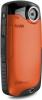
While many pocket camcorders have been designed for general purpose use, the Kodak Playsport is aimed more at the more adventurous members of society. To this end the Playsport combines electronic image stabilising technology, to assist when capturing sporting events, with the ability to be waterproof up to a depth of 10 feet for recording aquatic expeditions.
With dimensions of 58 x 112.5 x 19.5mm (W x H x D), the Playsport should fit comfortably in a pocket or bag without causing an unsightly bulge (Kodak has produced a case for this camera but this an optional extra). Available in a choice of colours, including Abyss (Black), Wave Crash (Blue), Adrenaline Rush (Purple) or the orange of the review model, the Playsport stands apart from the other pocket camcorder that I have looked at, in that it does not feature a flip-out USB connection arm.

It was not until I started checking out this next product that I realised that my computer system box had a face.
While perhaps not the first name you think of with regards to digital photography (although those of my generation grew up using this company’s photographic products), Kodak still has much to offer. Take, for instance, the company’s latest pocket-size camcorder appropriately entitled the Kodak Playtouch. Available in a choice of Smoke Gaze (Black), Chrome, Cabana (Orange) or Spa Blue (Teal), the Playtouch offers a range of features including full 1080p HD capability.
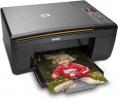
Do you opt for a cheaper inkjet and pay extra for ink cartridges or select a more expensive printer with reduced running costs? Kodak believes the latter is the way to go with kit such as the ESP3250.
Designed as the upgrade to its ESP3 product Kodak has released its ESP3250 model. While the jump from 3 to 3250 might seem rather large, it is more a marketing concept than a technological advance. Taking over the position of the company’s entry-level offering, the ESP3250 is an All-in-One (AiO) product that provides print, scan and copy facilities for the home user.
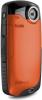
Around 18 months ago I told you about the Kodak ZX1 their first foray in the very popular pocket (mobile phone size) camcorder arena. Here is - I think - their next offering the ZX3 which gives you the ability to capture movies underwater to 3metres depth.
The Kodak ZX3 measures 11x6x2cm and it weights 140grams. Mine had a cream front dark grey back and sides and it was black around the top. There is a substantial hole near the bottom for a wrist strap – very important if you swim – above this on the front four buttons in a semi circle and the ubiquitous five position joystick centered in the lower part of the front.
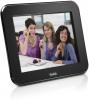
It's about a year since I last looked at a digital photo frame. The latest incarnation
from Kodak has a number of excellent innovations that make loading your images that much easier
and at the same time provide a marked improvement in the screen.
While a year or so ago a 7" screen was often the norm and a premium would get you an extra inch the Kodak Pulse provides a bright clear 10" LED backlit display. The screen is bordered by a modest black surround about an inch deep. The device includes an integral stand holding the display at about 85°. All configuration of the device is accomplished through the touch-sensitive screen - resulting in an almost button free product.
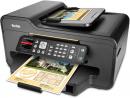
Most people say if it has fax its a multi function unit, why then do Kodak call this an All In One? That I cannot answer but I can be more helpful by telling you about the abilities of this ESP Office 6150 unit from Kodak.
The Kodak ESP Office 6150 measures 41x37x22cm, add another 10cm to the depth when the paper output tray is pulled fully out. It weights 8.5kilos. There are five connections all in a vertical row on the back right of the unit but none protrude as the paper handling causes a protrusion on the rear of the main unit. From bottom up they are phone line in, phone line out, D/C power in, Ethernet out and USB out. The front has a panel that clicks up 45degrees from vertical that has a TFT screen (4.5x3.
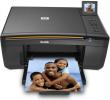
It has been a while since I last looked at a Kodak printer but the companys promotion regarding cost saving provides the ideal opportunity to check out one of the companys models.
Kodak has recently been making a great deal of noise regarding the ability of its printers to save you money with regards to the cost of ink replacement. Like me, you have probably seen the adverts that appear on television at regular intervals (I saw my first one within an hour of getting back from Kodak’s official announcement of this feature) or in newspapers and magazine.

On the surface, digital picture frames can look the same but beneath the hood lurks several differences.
In the past I have looked at several digital picture frames from various manufacturers. In every case these models all had one particular feature in common. These digital picture frames would only work when physically connected to a mains power outlet. Now that trend has been broken with the arrival of the latest digital picture frame from Kodak. This is the EasyShare S730 which features a built-in rechargeable battery and Quick Touch Borders.
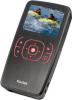
Kodaks pocket sized HD camcorder has been my recent companion when on my travels.
Like many of my generation, my first camera was a Box Brownie. Since those early days, cameras have changed out of all recognition with regards to their shape, size and functionality with the latter showing the greatest change as digital dominates the scene. The latest such device to come under my gaze is, in fact, not a camera but a camcorder from that doyen of all things photographic, Kodak. This is the Kodak Fx1 which is a HD pocket camcorder model.
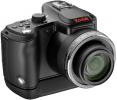
Kodak sells a lot of cameras and I get asked why do I not review more of them? Well here is one I was recently sent that has amazing zoom capabilities and it looks like a quality unit around the size of a DSLR.
This is the Kodak Z980 camera and it measures 12x8.5x10.5cm, the last figure the width can vary substantially when in use as the zoom lens moves out between 2 and 6cm when the camera is switched on. It runs on four rechargeable ‘AA’ batteries and they and the charger are supplied. The weight with supplied neck strap attached is 540grams.
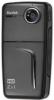
This is one of two small HD camcorders (mobile phone size) that I am looking at. So as part of my reviews I take some clips at local gigs and then send links to the clips to the musicians, whom I ask which is better and why.
I have previously reviewed a couple of the ‘Flip’ models who both took images at lesser resolution. This is the first pocket camcorder I have reviewed that takes movies in HD. It is 10.5x5.5x2cm and it weights 135grams. It is marketed with a You Tube logo on the face and indeed should you want to share videos with the world then this would work however if your efforts are for friends and family there is another way via Vimeo.




Main Menu


