Reviews related to : Camcorders
Camcorders have come a long way from the original bulky, heavy, power-hungry devices they used to be. Digital recording techniques have improved quality, increased battery life and reduced power consumption. Good quality camcorders are in many cases as small as SLR still cameras and as easy to slip into a pocket.
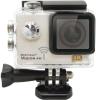
A small camera that comes with a large number of fittings so however you use it you should be able to get great videos and images up to 4K. My use of it was far more mundane but I was still amazed at the video and sound quality it produced.
The GoXtreme Vision 4K action camera measures 5.5x4x2.5cm without any fitting or extreme use case. As always with new devices I do what most people do and see what I can manage to work out without recourse to the manual. I found a Micro SD Card and inserted it, pressed the on/off button and took a short video, extracted the card and inserted it in the card reader it in my PC and watched the video without problem.
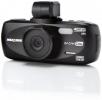
While your driving skills might be up to scratch with regards to your own safety and that of other road users, the same might not be true of some others. Accidents can, and do, happen. Sometimes it is hard to establish just where the blame belongs. This next product has been developed to help in such instances.
As part of its range of in-car camera product line-up, NextBase has released its 402G Professional model. This is the company’s top of the range product. Along with the main camera device, NextBase has included a suction mount, car power cable, a standard-to-mini USB lead, HD lead, a mini CD with software for both the Windows and Mac platforms plus instruction manuals for setting up the camera and installing the supplied software on the appropriate platform.
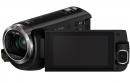
With digital cameras being able to capture video its been a while since I have cast my eye over a Camcorder. This was quite a revelation, it should not have been as digital cameras have evolved so have Camcorders and this one can even capture PIP.
The Panasonic HC-W570 camcorder measures 12.5x5.5x6cm and weights 306grams. It is called a twin camera and that is what it is. The normal lens at the front and a further lens at the far-left-edge of the TFT screen. It seems strange and it can be used or not according to the situation.
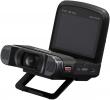
Most cameras that I review are still units that have the ability to take movies. This is almost the reverse being a unit most likely to be used to take video but it can also take still shots however this is fixed to one of two fixed distance focuses.
The Canon Legria mini XI measures 10.5x7.5x3cm and weighs 240grams. The front of the unit has the lens with twin microphones either side of it. When off the lens is covered. The back has a single LED labelled Access and a flip door behind which sits the solid battery and any SD card you use. There is flip stand that pulls out and is strong enough to stay where you put it so the unit could be placed on a shelf or table pointing at the object to be videoed.
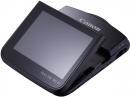
A rather different Camcorder in that it is very slim and fits easily in the palm of the hand. There are various angles to have the screen so you can capture images from various positions. There are two shooting modes one normal and one almost fish eye like.
The Canon Legria Mini measures 9.5x7.2x2cm when closed; the last figure the thickness can increase to 6cm with the viewing screen raised to 90degrees. It weighs only 174grams. The front has the lens that is covered when off and beside this two rather good stereo microphones. The right side has the on/off slider, then a flip open door that conceals a mini HDMI and DC input, next the on camera playback button and finally a wrist strap anchor point. The back is clear.
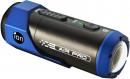
This is a high quality digital camera that records with a 14MP sensor, it is intended for use for people who do things of a daredevil nature in the open air, as such it can be strapped to a helmet while these deeds are being performed.
The camera itself is circular at 2.5cm and 10cm long and in this format it weights 150grams. It comes with a whole range of accessories and attachments. The Quick Start Guide has 14 pages in English and this at least explains what the various extra parts are and what they might be used for.
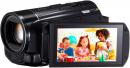
It started out as an evening to check out a Canon camcorder but events turned out differently to what I expected.
Recently I was a murder victim. I kid you not. There I was busily typing away on a Mac Book when I was repeatedly brutally stabbed several times by a masked maniac. This horrendous crime was committed at The Hospital but this location seemed bereft of doctors, nurses or even medical equipment. Fortunately my murder was part of an unscripted short film being captured on a Canon handheld camcorder.
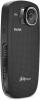
With Flips now a discontinued line there is a gap in the market for a small pocket size camcorder, this one from Kodak is waterproof to ten feet and has a range of special features as well as the ability to take stills as well as video.
The Kodak Play Sport ZX5 video camera measures 11x5.5x1.5cm and weights 125grams. Like most cameras and small video units the storage medium is SD card and this can accept cards up to 32GB. The on/off button is on the top of the camera, the right side has whatever SD card you use behind a snug fitting door. Bottom corner has two holes for you to feed a wrist strap though very useful for underwater use. The base has the normal tripod screw fitting.
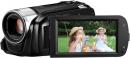
This tiny handheld unit has probably got more capture power ability than a full size tripod mounted film unit of not that many years ago, so for not that much money you can capture HD movies and sound without any real effort.
Its been a while since I have looked at a Camcorder – as opposed to a ‘Flip’ type unit or the ability of a digital camera – and even though externally it looks similar the guts and how it captures and deals with video has changed. It is 11.5x6x6cm when closed and it weights 305grams. The viewing and capture screen opens on the left side and this can add up to another 9cm to the 6cm width. The screen can rotate up to 270 degrees, 180 degrees away and 90 degrees towards.
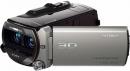
Christmas might seem many months away to most of us but Sony has already come up with a list of gadget gift ideas that could feature prominently on your Christmas wish list. The following examples from this collection feature products from the Sony Network, Essentials, Digital Imaging and Home ranges.
Described as the world’s first “Double Full HD” 3D consumer camcorder, the has an integrated dual lens system for creating 3D content. This product can play back Full HD 3D on any 3D capable HDTV or 2D on non-3D displays. For a smaller viewing experience you can use the camcorder's Xtra Fine 3.5-inch LCD touch screen that can deliver 3D footage without the need for special glasses. The HDR-TA10 has a 10X optical zoom and comes with 64GB of flash memory.
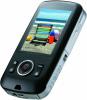
Often not being the first to market is a plus as is the case here. The Flip has long been the best pocket camcorder around; many have tried to copy or improve. Here with the best bits from several is this offering from GE.
GE have been in the small –pocket size- digital camera market for a few years now, last year they brought out a DSLR like unit that was a good bit larger. Here they go smaller with a pocket camcorder that has bags of features. It is 10x5.5x1.8cm and weights 146grams. It is stated to take full HD movies (1920x1080) but importantly it can take lesser sizes. It is stated to be shockproof with a 1.
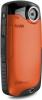
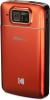
While many pocket camcorders have been designed for general purpose use, the Kodak Playsport is aimed more at the more adventurous members of society. To this end the Playsport combines electronic image stabilising technology, to assist when capturing sporting events, with the ability to be waterproof up to a depth of 10 feet for recording aquatic expeditions.
With dimensions of 58 x 112.5 x 19.5mm (W x H x D), the Playsport should fit comfortably in a pocket or bag without causing an unsightly bulge (Kodak has produced a case for this camera but this an optional extra). Available in a choice of colours, including Abyss (Black), Wave Crash (Blue), Adrenaline Rush (Purple) or the orange of the review model, the Playsport stands apart from the other pocket camcorder that I have looked at, in that it does not feature a flip-out USB connection arm.
It was not until I started checking out this next product that I realised that my computer system box had a face.
While perhaps not the first name you think of with regards to digital photography (although those of my generation grew up using this company’s photographic products), Kodak still has much to offer. Take, for instance, the company’s latest pocket-size camcorder appropriately entitled the Kodak Playtouch. Available in a choice of Smoke Gaze (Black), Chrome, Cabana (Orange) or Spa Blue (Teal), the Playtouch offers a range of features including full 1080p HD capability.
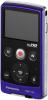
A pre-Christmas evening of magical card manipulation introduced me to a new camera from the Panasonic range. This was a pocket camcorder device.
Cisco has its Flip, whether of the Ultra or Mino variety; Kodak offers users a choice of its PlaySport or PlayTouch models; and Sony is pinning its faith in the Bloggie. With this in mind you might expect Panasonic to come up with something equally memorable as a title to bestow on its initial offering for those looking to purchase a pocket camcorder. In its wisdom Panasonic has decided that HM-TA1 will really grab public attention.
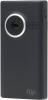
I have owned a Flip since the very first model, to me anyway, it is the best pocket camcorder, the latest software release has improved the compression algorithm when sending items to other people, making it even better.
Recently my own first generation Mino developed a fault, I was lucky the first time, a night to let the battery go flat and it recovered, then a few weeks later it did it again this time there was no recovery so this came along just at the right time. The new Flip Mino 8GB measures 10x5x1.5cm and weights 100grams. It looks very swish to me; mine was black with all but the back a lovely matt black that does show any finger marks. Sadly the back is a shiny black but finger marks rub off it okay.
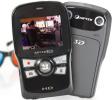
Some of the pocket camcorders can also take still images. This unit from Aiptek can take still and movies in 2D and it can also do the same in 3D. It has built in software to allow an interface on the PC, all fine in theory.
The Aiptek 3D HD Camcorder measures 11.5x7x2cm, the middle figure the width reduces to 6cm below the TFT screen which is 5x3.7cm. Viewing 3D images on the units screen is quite impressive, however you will not see 3D on your computer just a red and green haze on the edges of items in it. The same can be said for movies 2D are okay but 3D is a mess. The front of the unit has twin lenses 4cm apart and twin microphones 1.5cm below the lens.

This type of small camcorder has become very popular. The first I came across was the Flip with several incarnations. Then Kodak produced one and now Panasonic who are better known for high end cameras and camcorders. Panasonic call theirs a mobile camera.
The Panasonic TA1 measures 10.5x5x1.8cm and weights 110grams. Like most of these recent units it supports full HD and can capture still images. Mine was black and chrome, with the back and front black and the rest chrome. The face has the lens with the pin hole microphone just below. The base has a screw for a tripod. The left side has two doors in the chrome for A/V out and the slide out USB plug now favoured by most.
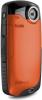
Around 18 months ago I told you about the Kodak ZX1 their first foray in the very popular pocket (mobile phone size) camcorder arena. Here is - I think - their next offering the ZX3 which gives you the ability to capture movies underwater to 3metres depth.
The Kodak ZX3 measures 11x6x2cm and it weights 140grams. Mine had a cream front dark grey back and sides and it was black around the top. There is a substantial hole near the bottom for a wrist strap – very important if you swim – above this on the front four buttons in a semi circle and the ubiquitous five position joystick centered in the lower part of the front.
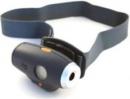
Chilli Technologies have produced a head cam ideal for wide angle shots for those times when you do not have an available hand such as cycling. The second is a mouse that does not require desk space to function this from Brando in Hong Kong.
The camera is 9x4x3.5cm and weights 130 grams when mounted on the tiny platform attached to a 3cm wide elastic band to fit round your head. The controls are simple an orange button on the top of the camera turns it on, press that button again and it starts to record, press it again and the recording stops. Press and hold the orange button to turn the unit off. There is a second small orange button under a 1.
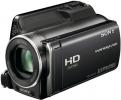
Not the absolute latest Camcorder from Sony, but this current version will do everything that most will want. A hard disc to record to, great video in full HD and the ability to take still images at a size that can be reproduced at A4.
The Sony HDR-XR155E measures 11.5x6.5x5.5cm and weights 345grams. With the TFT display open you add 8cm to the width. The TFT can be rotated through 270°. While there are controls on the unit almost everything can be done by touch using the TFT itself and this includes zooming.




Main Menu


