Reviews related to : Satellite Navigation
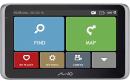
The Sat Nav makes sure you get to where you want to go and the camera means that the idiots who make you run into the back of them do not end up costing you your hard earned no claims bonus. Putting the two together should mean your peace of mind.
The MiVue Drive 55 LM measures 14x8.5x3.5cm where the last figure to the front of the forward facing camera. The viewable screen is 11x6.5cm which gives the notional diagonal imperial measurement of 5 inches. In the box is the Sat Nav/Camera described above plus the windscreen fitting, a 16GB micro SD Card as well as an adapter to make it fit into a standard SD card reader, there is also a 1.25metre mini USB to cigar lighter lead.
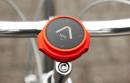
I think only one previous Sat Nav that I had seen has had a specific bicycle mode, this was interesting as it enabled things like bridle ways into the journey equation. A pedestrian Sat Nav would allow progress down one way streets. This offering from Beeline is rather different again.
The Beeline cycling Sat Nav uses your Mobile Phone to plan the journey and then has a small circular sealed rubber device that you attach to your handlebar to point the correct way meaning your phone can remain safely in your pocket. It is circular at 5.5cm and 2cm deep, there is a 3cm rubber loop that goes around your handlebar and its total weight is 60grams. It has a built in clock – once initially linked - which can show the time even when your phone is switched off.
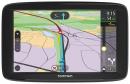
It seems a long time ago when I first looked at one of these devices and they have moved on in what they show and indeed how they show it. For those who do not know it's a screen that shows you the easiest/quickest way to get from A to B and these days so much more. According to some information I was sent they have been around for 25 years.
The TomTom Via62 GPS satellite navigation unit measures 16x10.5x4cm the last figure the amount it will stick out from your windscreen is a minimum figure it can be far more according to the slope on vehicles windscreen. There is a forty page booklet printed in six languages with one fact per page, the first twenty six have helpful information which should enable even a first time user to set things up successfully. The item attaches to your windscreen via a two way sucker mechanism.
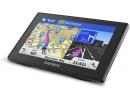
Having recently told you about a rather good Road Cam from another manufacturer I was offered the chance to review this top of the range unit that is both a Sat Nav and Road Cam in the one package, so is the extra expense worth it?
The unit is 14x8.5x5cm which is not that much bigger than most Sat Navs. Unlike most standalone Sat Navs that can be used for a reasonable period out of car this unit is designed for in car use only. It has a very small internal battery and relies instead for power for that provided by the cigar lighter socket of your car. The viewable screen is 11x6.3cm which is touch controlled.
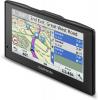
When taking a drive you can call on assistance from Garmin with products such as its Drive Assist 50 product.
Garmin has recently introduced its Drive range of portable navigation devices (PNDs). I have had the opportunity to test the Garmin Drive Assist™ 50 product. This particular PND combines the company’s well-established satellite navigation features with a built-in dash cam facility to record action and act as an eyewitness to possible incidents. Encased with a black plastic shell, this PND has dimensions of 160 x 85 x 30 mm (W x H x D) and weighs 214g.
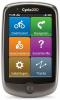
Certainly a first for me, a Sat Nav designed for use on a bicycle, most car Sat Navs are totally unsuitable for such a job as their batteries have at best only a few hours of use before they expire without help from a cars battery.
This unit has a battery that last a good ten hours which should be a decent days cycling even for an enthusiast, after ten minutes of inactivity the screen blanks and that saves power as well. The main difference between a car sat nav and one for a bicycle is no voice just beeps. As I do with all Sat Navs I take it on a bus and sometimes even a train to get to know what it shows and how it shows it.
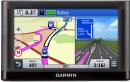
Used correctly, a SatNav device can provide navigational instructions and other related information regarding selected routes.
The nṻvi 65 LM is a Garmin SatNav device. This product comes with free UK and Ireland maps that will be updated for the lifetime of the device via a physical link to a computer. Included in the box with the SatNav device are a vehicle suction cup mount, vehicle power cable for attaching to the cigarette lighter socket, standard to mini USB lead for use with a computer or mains power and a Quick Start manual.
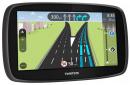
When thinking about devices for providing navigational aids and other kinds of driving assistance, such as SatNav units, one name that immediately springs to mind is that of TomTom. This is a company that concentrates its expertise on the particular area of SatNav and has developed various ranges of products including the Start brand. One such offering is the TomTom Start 60 product, supplied by QVC for the purpose of this review.
Unpacking the TomTom Start 60 product reveals the SatNav unit, a car lighter adapter plug that links to the supplied standard-to-micro USB lead and a User Manual booklet covering major European languages. As the largest model in the Start range, this product has dimensions of 16.99 x 10.48 x 2.22cm (W x H x D). The SatNav device is predominately black in colour apart from a grey band trimming the front of the unit and a silver TomTom logo.
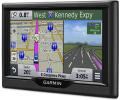
Over the years satellite navigation has improved greatly, you can now find satellites when indoors, the information you get is really up to date and best of all even mobile speed and traffic light camera information is included.
This is the top of the range model of four recent ‘nuvi’ offerings launched by Garmin. While not as large as some ‘built in’ units I have travelled with for an add in unit it is large at 13.5x7.2cm viewable screen this gives the notional diagonal imperial measurement of 6inches. The actual unit size is 16.5x9.2x1.4cm and weights – without the attachments – 246grams.
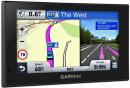
Its been a while since I have cast my eye over a standalone Sat Nav for a car, after all most SmartPhones can give you directions so why should you buy a device designed for a single job that does have just a single purpose to get you from A to B.
It is designed for landscape use and is 14x8.5cm when being used out of car the weight becomes important and without any fittings attached that is 177grams. The viewable screen is 11x6.3cm and is rather reflective so in out of car use needs to be shielded on a sunny day. While this is intended for in car use I always do some of my tests walking, on buses and even on trains. The reason for the last two is that you can concentrate on the screen something you should never do when driving.
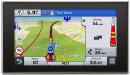
The Garmin nüvi 3597LMT is a top of the range satnav providing European coverage. It has a high resolution 5inch display and incorporates a wide range of features aimed at improving navigation and enhancing its usability.
It is roughly 5.5 x 3 x 0.5 inches and is supplied with the necessary cables and a suction mount that can be left permanently on the windscreen. The unit is placed on the mount where it is held in position magnetically and, at the same time, makes the necessary electrical connection. This is far more convenient than the common arrangement where the cable must be plugged each time directly into the satnav unit.
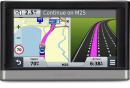
Not having to worry about navigation issues can help reduce the stress of driving which is why a SatNav device can be a useful aid for the motorist.
As part of its 2013 line-up of SatNav products, Garmin released a number of new models including the nuvi 3598 LMT-D. This product consists of the main mini tablet-like rectangular unit with various connection add-ons. These add-ons are a suction cup, magnetic mount, standard to mini USB lead and a power lead with a mini USB connection at one end and a cigarette lighter plug at the other. This power lead also has an attached antenna lead to help with signal reception.
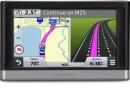
With the functionality now available from various devices such as smartphones and tablets, the manufacturers of SatNav products face an increasing challenge to persuade would-be purchasers to loosen their purse strings. Why should customers spend their hard-earned disposal income on a new SatNav product when they already possess the tools that are capable of providing basic navigational information through the use of GPS and mapping apps? Garmins solution to this conundrum is to bundle free lifetime services with its new SatNav line up of models.
The latest Garmin product line up consists of its nüvi SatNav devices categorised as Essential, Advanced and Premium models. This review is based on the Advanced range of which there are three distinct models. My review sample is the 5-inch version rather than the 4.3-inch or 7-inch units.
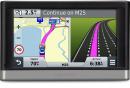
Over the years satnavs have got more user-friendly and more sophisticated. Garmins 2598LMTD is a vast improvement over products available even just one or two years ago. It comes with maps covering 45 European countries and free lifetime map updates so will meet the needs of the traveller both today and into the future. Consequently, as well as the first-time buyer, many existing users could well consider that it is s worthwhile upgrade.
The 2598 is matt black in colour with the exception of the silver styling strip below the 5 inch screen. It is provided with a windscreen suction mount and a 170cm “traffic-compatible” power cable terminating in a mini-USB connector at one end a cigar lighter plug at the other. The mount has a quick-release catch that it would be possible to leave the mount permanently on the windscreen and just quickly detach the unit itself.
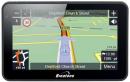
Living, as I do, on a one-way street, I often notice cars proceeding along my road travelling in the wrong direction. Perhaps such drivers would benefit from using a product such as the Binatone R430.
With the strap line of “Drive like a local”, Binatone has released its R430 SatNav device. As the number forming part of it title might indicate, this unit features a 4.3-inch colour touch screen (perhaps “tap” would be more appropriate) within a reasonably wide black bezel. The overall dimensions of the unit are 78 x 122mm (W x H) with a depth of 13mm.
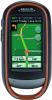
Not so much a sat nav although it can do that but a tool to guide you around the countryside for what I am told is a new craze Geo Tagging. People hide clues and you then go on a search for the next and so on using this tool.
Sometimes you will need to prove you have been somewhere so the built in camera can do that with time and place information. It is 12.5x6.5x3cm and weights 225grams. It is powered by two standard ‘AA’ batteries. The base of the face has a gap that either a clip or thin cord can be passed through to enable you to secure the device to say a rucksack.
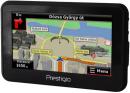
Computerised assistance in helping you get from point A to point B when travelling has come a long way (no pun intended) since the days when Auto Route was introduced. Incidentally Auto Route was the first product that I came across which required the user to activate the software with a phone call.
Now we have a number of GPS products that can provide almost instant feedback as to the route and current position plus offer details about points of interest, speed camera locations, traffic updates and different viewing modes. One of the companies offering this type of technology is Prestigio with its GeoVision range of devices. Recently the GeoVision 5120BT model has been taking on the role of my driving assistant. The results form the basis for this review.
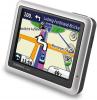
While I have checked out a number of GPS devices in the past, I was not prepared for my initial introduction to a unit from Garmin.
When receiving a GPS device for reviewing purposes I like to carry out the initial set up process from the comfort of my living room. Selecting the appropriate language; adjusting the date/clock feature; opting for my chosen measurement unit; and even entering my home address details are just some of the tasks that are more convenient to complete in a relaxed surroundings.
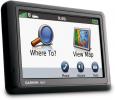
The Garmin 1490T is a 5 inch screen GPS unit which offers, as well as the basic features, Bluetooth connectivity, traffic alerts and maps of Europe and not just the UK and Ireland. It is intuitive in operations, provides spoken street names and has a high contrast colour screen which is easy to read under most conditions
At first sight the 1490T appears enormous and one wonders whether, once it has been fixed on a car’s windscreen using the provided suction mount, it will obstruct one’s view and will prevent you from actually seeing the road. However, after a few minutes experimentation one finds a place on the windscreen where it can easily be seen, swivelled to a suitable angle and yet does not get in the way of one’s driving vision.
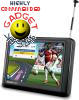
This is a Sat Nav unit from one of the best known names in that field. This is also an in car TV capable of receiving all the digital channels. Why put both in one unit? Well if you have ever travelled with children you will know why.
The Garmin Nuvi 1490TV SatNav measures 14.5x8.5x1.8cm the weight without any holder is 250grams. It can be used in the front of the car as a sat nav, in the back of the car as a TV and should you wish still as a sat nav where it can still give directions. Finally it can be used in Pedestrian or Bicycle mode as well as Car mode. I tested all but bicycle as I no longer ride a bike. The viewable screen is 11x6cm and even with one single aerial attached indoors. I found this amazingly good.




Main Menu


